ads

Showing posts with label hunza. Show all posts

Monday, September 13, 2010

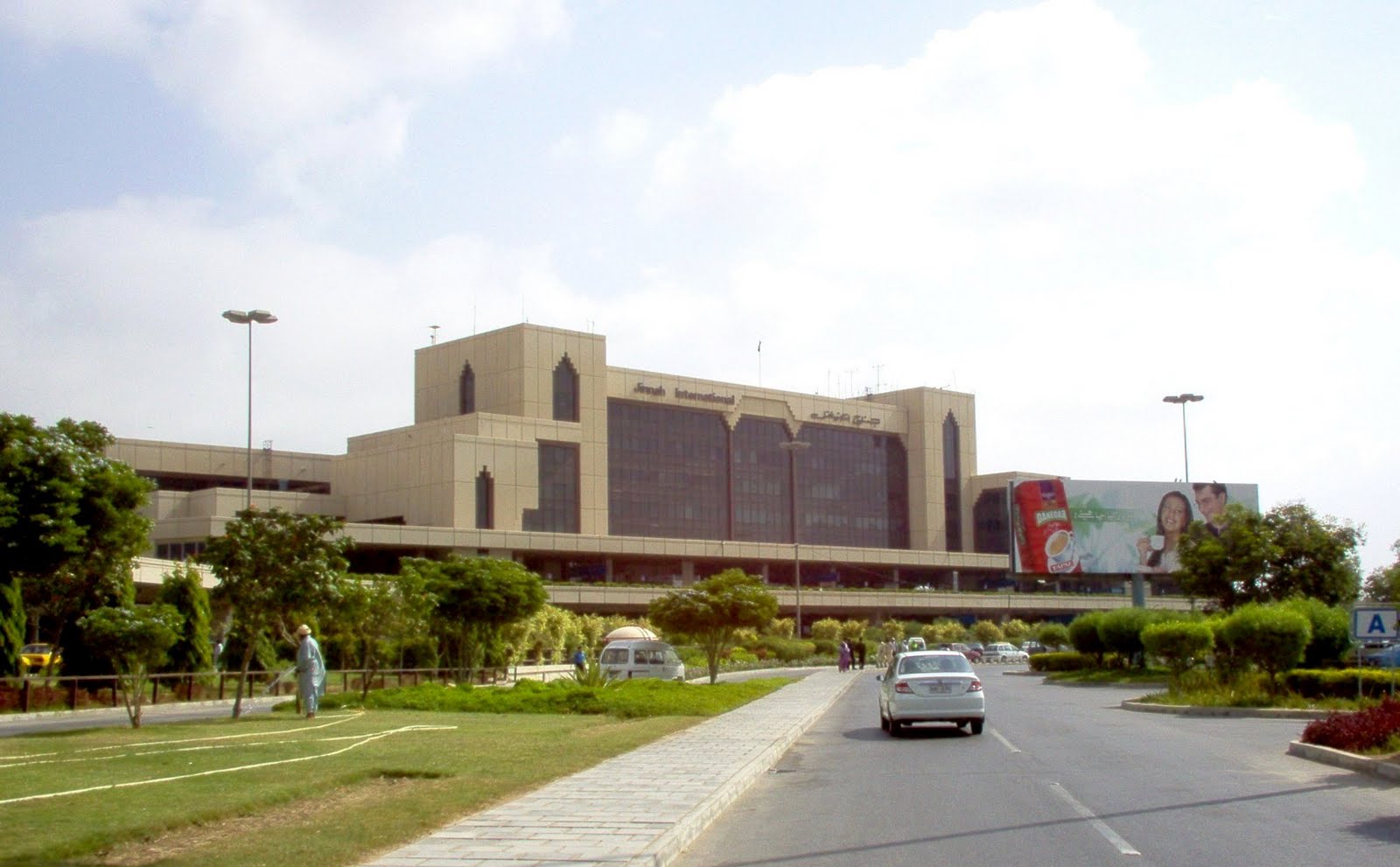
Jinnah International Airport


Jinnah International Airport

Jinnah International Airport previously Quaid-e-Azam International Airport (IATA: KHI, ICAO: OPKC) is Pakistan's largest international and domestic airport. It is located in Karachi, Sindh, and is also commonly known as the Jinnah Terminal. The airport is named after Muhammad Ali Jinnah, the founder of Pakistan, who was also known as Quaid-e-Azam ("Great Leader").

The airport provides primary hub for the flag carrier, Pakistan International Airlines (PIA), Shaheen Air International, and Airblue as well as many other private airlines. The airport is equipped with aircraft engineering and overhauling facilities including the Ispahani Hangar for wide-body aircraft.

History

During the 1940s there was a large black coloured hangar (also locally known as Kala Chapra) at the site of Karachi Airport, constructed for the British R101 Airship. Only three hangars were ever built in the world to dock and hangar the R101 airships. However, the R101 airship never arrived in Karachi (then part of the British Raj) as it crashed early in its journey in France. This hangar was so huge that aircraft often used it as a visual marker while attempting VFR landings at Karachi. Over the years, the hangar became known as the landmark of Karachi, until it was torn down by order of then-President Ayub Khan in the 1960s.

During World War II, Karachi Airport was a major transhipment base for United States Army Air Force units and equipment being used by Tenth Air Force in eastern India and Burma, as well as for Fourteenth Air Force in China. Several operational bomber and fighter units flew into Karachi for short organizational periods prior to their deployment. Air Technical Service Command had extensive facilities where aircraft were received, assembled and tested prior to being flown to their combat units at forward airfields. It also functioned as a major maintenance and supply depot for both air forces. In addition, Air Transport Command flew numerous cargo and passenger flights to the Middle East and to points within India and China.

The airport facilities were further expanded in the 1980s to Terminal 2 and Terminal 3 respectively. The present day infrastructure of Jinnah International Complex is a result of an expansion programme carried out in 1994. Today, the new Jinnah Terminal handles both domestic and international flights, whereas Terminal 2 is now dedicated to Hajj operations. Terminal 1 (which was actually the entirety of the airport in the British days) as well as Terminal 3 are now used for commercial offices, airline offices, and a string of bank counters and ATMs for public use.

Karachi was once a much busier airport. Between the 1960s and 1980s it was an online station of several major airlines of the world including British Airways, Interflug, TAROM, Alitalia, JAT Yugoslavia Airlines, Aeroflot, Philippine Airlines, Nigeria Airways, Ethiopian Airlines, EgyptAir, East African Airways, Kenya Airways, Air France, Qantas, Pan Am, Royal Jordanian, Libyan Arab Airlines, Japan Airlines, Syrian Arab Airlines, Middle East Airlines, Swissair, and SAS. However, due to the emergence of Dubai's airport on the world map, increased usage of longer haul aircraft, and the poor political climate of Karachi during the 1990s, several airlines discontinued their service to the airport.

In the past couple of years Karachi has seen a reversal in fortunes. The dwindling numbers of international airlines have stabilised and whilst there hasn't been a marked increase in the number of airlines flying in to Karachi, some have either increased the number of flights or resumed their old operations, either online or via codeshare service.

Economic factors may be partly responsible for the upswing in activity at the airport. As industrial growth in Karachi and the rest of Pakistan expands, some European and Asian carriers are mooting resumption of services to Jinnah International.

Structure

In fiscal year 2007-2008, over 26.6 million passengers used Jinnah International Airport. 249,283 aircraft movements were registered Jinnah International Airport in Karachi has always been the largest aviation facility in Pakistan. It is the primary hub of Pakistan International Airlines (PIA). All other Pakistani airlines also use Jinnah International Airport as their main hub. These include airblue and Shaheen Air International, as well as several charter carriers.

The building is linked via connecting corridors to two satellites, each having a provision of eight passenger-loading bridges. The eastern satellite is devoted exclusively to handling international operations. The western satellite is used for domestic operations, as well as some international operations. This is achieved through a flexible arrangement of gates. The two satellites supplement the departure lounges of the terminal building and also provide shopping facilities and snack counters.

The Jinnah Terminal was completed in 1992 at a cost of US $100 million - at the time the most expensive civil construction project in Pakistan[citation needed]. NESPAK (National Engineering Services Pakistan) and Airconsult (Frankfurt, Germany) were responsible for the architecture and planning of the terminal. Sogea Construction, a French company, was the contractor. Mukhtar Husain (NESPAK) was the Chief Architect for the new terminal.

In Karachi, the CIP Lounge can be used by all first and business class passengers on all outbound flights. Private banking clients of MCB Bank Ltd can also use the lounge on complimentary basis under contract to CAA as part of their benefits package. Only passengers who have been pre-issued an airline card from the check-in desk can enter the lounge. Other passengers who wish to use the lounge may do so upon payment of charges of USD 6.00 (international) or PKR 100/- (domestic). The lounge features light savoury snacks and non-alcoholic beverages, satellite TV, audio entertainment, newspapers, magazines, telephones, fax facilities, wireless Internet, and mobile charging points. There are also two McDonald's kiosks located on-site at the airport. airblue has also introduced their own lounge in the international terminal of the airport.

There are a number of banks that passengers can use at the airport including Askari Bank, Barclays, Citibank, Habib Bank, National Bank of Pakistan, MCB Bank, Royal Bank of Scotland, Standard Chartered Bank, and United Bank; which offer ATMs, foreign exchange facilities, traveler's cheque encashment, and personal banking. Private banking clients of Barclays worldwide (high net-worth individuals) now have their dedicated lounge as well. It features a hot buffet, speciality coffees, multimedia entertainment, shower and spa facility, and concierge service.

The airport is also where the majority of PIA's maintenance network is located, although some of its maintenance work also takes place at Benazir Bhutto International Airport, Rawalpindi. There are several hangars at the airport; the largest being the Ispahani Hangar (named after Mirza Ahmad Ispahani, the first chairman of PIA) that can accommodate two Boeing 747s and one narrow body airliner (e.g. Boeing 737) at one time. On 15 February 2006, the first major overhaul of a Boeing 777-200ER aircraft (known as "C" check) was done at Ispahani Hangar. Most of the PIA aircraft are checked and regulated at the aircraft hangars in Karachi. The PIA maintenance also check other airline aircraft in Karachi such as Philippine Airlines, Turkish Airlines, and Air Universal.

Thursday, July 2, 2009

Hunza Pakistan


Hunza Valley is a mountainous valley in Gilgit in the Gilgit-Baltistan region of the Northern Areas of Pakistan. The Hunza valley is situated at an elevation of 2,438 metres (7,999 feet). The territory of Hunza is about 7,900 km² {3,050 mi²). Karimabad (formerly called Baltit) is the main town which is also a very popular tourist destination because of the spectacular scenery of the surrounding mountains like , Ultar Sar, Rakaposhi, Bojahagur Duanasir II, Ghenta Peak, Hunza Peak, Darmyani Peak, and Bublimating (Ladyfinger Peak), all 6,000 m (19,685 ft) or higher.

History

Hunza was formerly a princely state bordering China to the North-East and Pamir to its North-West, which continued to survive until 1974, when it was finally dissolved by Zulfiqar Ali Bhutto. The state bordered the Gilgit Agency to the south, the former princely state of Nagar to the east. The state capital was the town of Baltit (also known as Karimabad), and its old settlement is Ganish Village.

Hunza was an independent principality for more than 900 years. The British gained control of Hunza and the neighbouring valley of Nagar between 1889 and 1892 followed by a military engagement of severe intensity. The then Thom (Prince) Mir Safdar Ali Khan of Hunza fled to Kashghar in China and sought what can be called political asylum. The most authentic and dependable notables and the best of oral tradition narrator of Hunza, through generations, have narrated the tale as follows, That when King Alexandar Zulqarnian (The two homed King Alexander) conquered all the Cities and countries and brought them under his sway, he finally consolidated and established his court of justice. Hence the hoards of the armies of the king were returning through this place (Hunza Valley) from the direction of China, While this army was passing through this valley, four persons of this force Shaano, Safar, Mamoo, and Mr. Fulolo fell ill. On this the commander of this Army appointed and detailed the fifth person Mughal Titam as the caretaker- of this small ill group. He was tasked to look after the remaining four persons till they all had recuperated from their diseases. He was ordered that once, by the grace of God, when they all were healthy and normal they were to make efforts to reclaim and settle this valley and make It irrigable and inhabitable.

After that every horseman and the foot soldier of the rest of the passing army was ordered to contribute a fistful of barley and flour as a contribution from each man respectively, as the rations for the sustenance of these five men, It is said that the amount of barley and flour collected in this manner had lasted for next three years as rations for this group of five men. After this stop over the rest of the army left this place and marched towards Gilgit. Once this army arrived at Gilgit a commander. named as Shah Raees, was detailed and appointed to reclaim and inhabit Gilgit valley. He managed to reclaim Gilgit valley and commenced to rule this valley, It is since this period /era that the family /clan of rulers of Gilgit have been named With the title of “Raeesay”.

However the second version of this tale has been narrated thus; that when Sultan Sikander (King Alexander the great) conquered most of the countries of this side of the world and brought them under his reign, he turned towards his mother land with great pomp and show During this Journey back home when he reached the city of Babal (Babylone) he fell fatally sick. However,. before his death and while on his death bed. he equally allotted (apportioned and granted) his conquered lands among four of his trusted commanders of his army. Among them there was a commander by the name of Bakhtaria and he was the ruler of Tartaristan. After passage of a number of years this very military commander passed through this valley at the head of his army while returning from his campaign. The five above mentioned persons left behind at this place were from this army who had fallen sick and had reclaimed and inhabited this valley after they had fully recovered from their illness.

Yet another version of the "first settlers" of Hunza Valley is narrated by the ancient era oral tradition as follows: That a great revolution (of unspecified nature) occurred in the country of "Tartar" having its capital in a city called Takla Makan. This country was also known/called as "Bakhtaria" by some, and it was Inhabited by various clans and tribes; like Mughuls and Hunns. Because of the above mentioned great revaluation the people of this country were compelled and forced to flee in great numbers. it was during this large scale exodus and forced migration by the people of the Tartaristan/ Bakhtaria (Bactria) that a large group of these fleeing refugees comprising men, women and children along With their entire belongings and domestic animals passed through the present day valley to Hunza, which was during that era called and known as "Hari Yol" or "Ha Ha Yol, meaning the valley of happiness, and merry making. It was from amongst this passing group of fleeing refugees that one Mr. Mughal Titam of Mughal tribe was injured and temporarily disabled to walk as a result of his horse's kicking blows to his leg/thighs. He was therefore unable to proceed further and to undertake a long journey. Hence the leader/commander of the entire group of refugees detailed the four men, namely Messrs Safar, Shaano, Mamoo and Fulolo as the servants and caretakers of Mr. Mughal Titam and left them behind Rest of the migrating refugees group continued its march towards Gilgit Valley and on arrival reclaimed and inhabited this valley. Many of the refugees then dispersed into many other directions and Surrounding valleys.

In short; when Mr. Mughal Titam recuperated and recovered from his injury he and his four companions commenced their work to make this barren valley irrigable and inhabitable. Messrs Shaano, Safar and Mamoo remained in the company of Mughal Titam in Baltit and Mr. Fulolo made his abode in Ganish. It is said that Mughal Titam had a son by the name of Mughal Diram. This

Mughal Diram had three sons, their names were; the first was Diram Pun, second Diram Budin, and the third was called Diram Muko. Following is the family tree of one of the first settlers of Hunza Valley (who was the leader):-

Mughul Titam - Mughul Diram

1,Diram Pun (Poon) 2. Diram Budin 3. Diram Mukko

By the grace of Almighty there reached a stage and era when the children of all these three brothers grew info a large tribe, This tribe became known as "Diram hupkuyantsze" (DIRAM THAP KUYANTS). The tribe was also called as Diram Harai (DIRAM HARA'Y). This tribe ruled the remaining people of Hunza. However they remained under the sUzarainty of heirs of Shah Raees, the ruler of Gilgit.

The other four persons i.e. Shaano, Safar, Mamoo and Fulolo also had many children and offsprings and over a period of time each of them grew Into a separate whole tribe. The generations of children of Mr. Safar are called as Safar Harai (SAFAR HARA'Y) tribe. The offsprings of Mr. Shaano became known as SHAHNO KUTZS (SANO KUTS). In the present era, they are called Barataling (BARATALlNG). Their abode or village is named Shaano Kushal (SANOKUSHAL).

First Muslim Thum

The ruling family of Hunza is called Ayeshe (heavenly), from the following circumstance. The two states of Hunza and Nager were formerly one, ruled by a branch of the Shahreis, the ruling family of Gilgit, whose seat of government was Nager. Tradition relates that Mayroo Khan, apparently the first Mohommedan Thum of Nager some 200 years after the introduction of the religion of Islam to Gilgit, married a daughter of Trakhan of Gilgit, who bore him twin sons named Moghlot and Girkis. From the former the present ruling family of Nager is descended. The twins are said to have shown hostility to one another from birth. Their father seeing this and unable to settle the question of succession, divided his state between them, giving to Girkis the north, and to Moghlot the south, bank of the river.

Thum

The traditional name for the ruler in Hunza was Thum which is also a respectful appellation used by people of both Hunza and Nager who belong to the caste of Boorish. The Shin use the term Yeshkun for the Boorish.
Both Thums are still addressed as Soori, as a title of respect. This appears to be the same [in meaning] as Sri, an appellation of Lakshmi, the Hindoo goddess of wealth, commonly prefixed to the names of Hindoo princes in India, to denote their honour and prosperity. The Thum's wives are styled ghenish which is almost identical with the original Sanscrit word for mother, and their sons are called gushpoor

Geography

The Hunza is situated at an elevation of 2,438 metres (7,999 feet). For many centuries, Hunza has provided the quickest access to Swat and Gandhara for a person travelling on foot. The route was impassable to baggage animals; only human porters could get through, and then only with permission from the locals.

Hunza was easily defended as the paths were often less than half a metre (about 18") wide. The high mountain paths often crossed bare cliff faces on logs wedged into cracks in the cliff, with stones balanced on top. They were also constantly exposed to regular damage from weather and falling rocks. These were the much feared "hanging passageways" of the early Chinese histories that terrified all, including several famous Chinese Buddhist monks such as Xuanzang.

Climate

The temperature in May is maximum 27 °C (81 °F) and minimum 14 °C (57 °F) and October maximum is 10 °C (50 °F) and 0 °C (32 °F). Hunza's tourist season is from May to October, because in winter the Karakoram Highway is often blocked by the snow.

Transport

Today, the famous Karakoram Highway crosses Hunza, connecting Pakistan to China via the Khunjerab Pass. Travelling up the valley from the south, Hunza is the land to the left, and the former state of Nagar to the right of the Hunza River. Regular bus and van services operate between Gilgit and Central Hunza (Ganish Village, Aliabad and Karimabad) and also between Gilgit and Sost Gojal. PTDC Office at Gilgit, Sost and Islamabad arranges tours and transport for visitors.

Spectacular scenery

Hunza is one of the most impressive places in the world. Several high peaks rise above 6,000 m in the surroundings of Hunza valley. The valley provides spectacular views of some of the most beautiful and magnificent mountains of the world which include Rakaposhi 7,788 m (25,551 ft), Ultar Sar 7,388 m (24,239 ft), Bojahagur Duanasir II 7,329 m (24,045 ft), Ghenta Peak 7,090 m (15,631 ft), Hunza Peak 6,270 m (20,571 ft), Darmyani Peak 6,090 m (19,980 ft), and Bublimating (Ladyfinger Peak) 6,000 m (19,685 ft). Hunza Valley is also host to the ancient watch towers in Ganish , Baltit Fort and Altit Fort.Watch towers are located in heart of Ganish Village, Baltit Fort stands on top of Karimabad whereas Altit Fort lies at the bottom of the valley.

The valley is popularly believed to be the inspiration for the mythical valley of Shangri-la in James Hilton's 1933 novel Lost Horizon. As one travels up on the Karakoram Highway, the beautiful sceneries keep on revealing themselves. On the way one can witness the 65 km long 'Batura' glacier, the second longest in Pakistan, surround by Shishper, Batura and Kumpirdior peaks. On reaching Sost one can continue the journey up to Khunzhrav or turn west to witness the mystic beauty of Chipursan (also Chapursan) valley. Chipursan valley has some of most exotic tourist spots in the area. In Yarzerech (also Yarzirich) you can have a look at the majestic Kundahill peak (6000 m), or trek along the Rishepzhurav to the Kundahill to experience the soothing sceneries. Beyond Yarzerech you can travel further to Lupghar, Raminj, Reshit, Yishkuk up to Bobo Ghundi (Oston), the shrine of Baba-e-Ghund, a saint from Afghanistan near the border between Pakistan and Wakhan region of Afghanistan.

Ganish Hunza

Old historical village which is not maintained at all. They have spotters outside that call this guy who comes out right when they see a Non...